
How to Break in Pool: 8-Ball and 9-Ball Tips for Beginners
Every game of pool begins with a bang. The break is the loudest, most exciting shot on the table, and it is also the one most beginners get wrong by swinging as hard as they can. Want a better start? Here is how the break really works, and how to make yours more controlled, more consistent and a lot more fun.
With the Mosconi Cup heading to Orlando on November 27-30, you will soon see the world's best players cracking racks on ESPN and WNT TV. Watch closely: their breaks look smooth, not wild.
What makes a legal break?
Rules differ a little between events and leagues, so always check the rules you are playing under. In general, the cue ball starts behind the head string (the line across the table at the first diamonds), and the shooter has to do something useful with the shot.
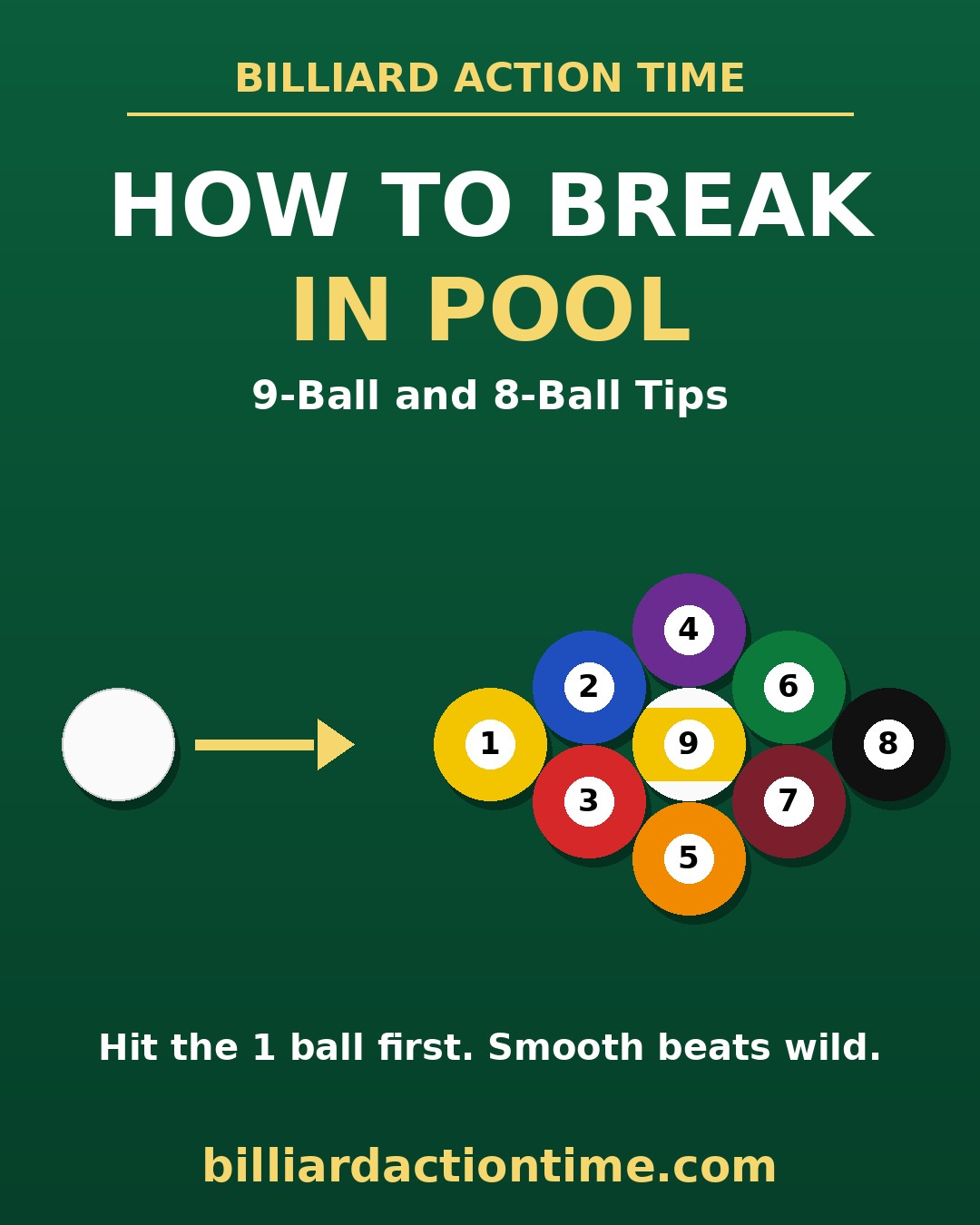
- 9-ball: Hit the 1 ball first. Then either pocket a ball or send at least four object balls to the rails. Pocket the 9 on a legal break and you win the rack.
- 8-ball: Under common rules the breaker must pocket a ball or drive at least four object balls to the rails. What happens if the 8 ball drops on the break varies by rulebook, so ask before you play.
Not sure which game you are playing? Our guides cover the basics of each.
Start with a tight rack
A good break begins before you shoot. Balls should be touching, with the front ball sitting on the foot spot. A loose rack soaks up energy and gives you a weak spread. If you rack for yourself, tap the balls together gently and lift the rack straight up.
Set up your cue ball
Where you place the cue ball changes everything.
- Straight on: Many players place the cue ball near the center or slightly off to one side and aim for the front ball. Experiment with a few spots and keep the one that gives you the most consistent hit.
- Same spot every time: Pick a position and repeat it. Consistency is how you learn what your break does.
- Cue ball in the middle: Hit the ball at the center or just above it, so the cue ball does not skid sideways or jump.
Smooth beats wild
Here is the secret: speed helps, but control helps more. A hard break that scatters the cue ball into a pocket is worse than a medium-fast break that hits the head ball squarely. Aim for a long, smooth stroke with a steady follow-through.
- Take a solid stance and a firm bridge. If you need a refresher, read our guide to building a solid bridge and stance.
- Take a few slow practice strokes, aiming at the center of the head ball.
- Pause at the back of your stroke, then accelerate smoothly through the cue ball.
- Keep your head down and your body still until the balls stop moving.
Many good breakers add a little body drive, rising slightly into the shot as they stroke. It can add power, but only try it once your basic stroke is solid.
Keep the cue ball under control
The best breakers do not just spread the balls. They also land the cue ball near the middle of the table, where it has a clear view of the next shot. If your cue ball keeps flying off the table or into a corner pocket, slow down a little and check that you are hitting it dead center.
Why a good break matters
In 9-ball especially, the opening shot can decide who gets the first chance at the table. A clean break that pockets a ball and leaves the cue ball in a good spot hands you the run. Even a break that pockets nothing can still be a good one if the balls spread well and your opponent has no easy shot. Think of the break as the first move in a chess game, not just a loud noise.
Three quick break drills
- The consistency drill: Break ten racks at medium speed and write down where the cue ball ends up. Aim for the same area each time.
- The contact drill: Without a rack, hit the foot spot with the cue ball ten times in a row. Accuracy first.
- The speed ladder: Break at three speeds (easy, medium, firm) and see which gives the best spread with the best cue ball control.
Common break mistakes
- Muscling it: Tight arms slow the cue down and hurt accuracy.
- Looking up early: Watch the contact, not the result.
- Hitting too low or too high: Low can bounce the cue ball, high can send it chasing the pack.
- Changing everything every rack: Tweak one thing at a time.
Where to practice and watch
Find a local event on our tournaments page, check the calendar for upcoming pro action, and follow our Mosconi Cup 2026 hub for dates and viewing details. Watching the pros break in slow motion is a free lesson.
So, are you a power breaker or a smooth breaker? Pick one drill, try it at your next session, and see how your racks change.
Sources
- World Pool-Billiard Association (rules and regulations)
- Eight-ball (Wikipedia)
- 9-ball (Wikipedia)
- Matchroom: Mosconi Cup 2026 on ESPN
▶ Latest Shorts
See all videos →▶ Billiard Action Time on YouTube. Watch pool match recaps and trick shots on our YouTube channel.
Subscribe on YouTube