
How to Choose Your First Pool Cue: Weight, Tip and Budget Tips
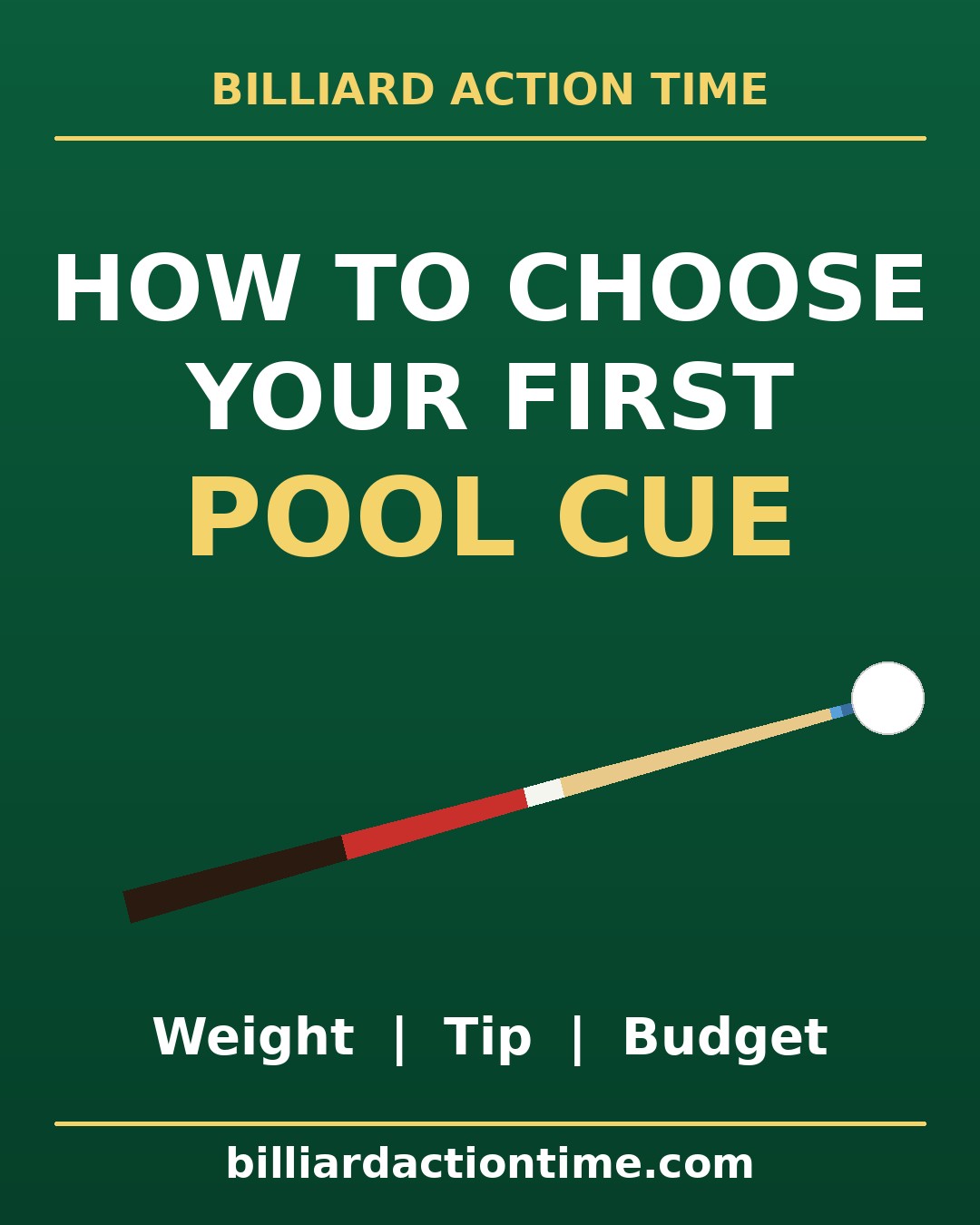
Walk into any pool hall and you will see a wall of house cues: bent, chalky and a little beat up. They get the job done, but sooner or later every player wonders, "Would my own cue make me better?" Here is a friendly, no-pressure guide to picking your first one.
Do you really need your own cue?
Not on day one. House cues are fine while you learn the basics. But a personal cue gives you something valuable: consistency. The same weight, the same tip and the same feel every time you pick it up. That makes it easier for your stroke to settle in.
Start with weight
Most pool cues weigh between 18 and 21 ounces. Many retailer guides suggest 19 to 20 ounces as a safe starting point for beginners. In general, a heavier cue can feel more powerful on the break, while a lighter cue can feel more nimble on delicate shots. If you are unsure, try a few at a pool hall or shop and see which one feels natural.
Look at the tip
The tip is the small leather piece that touches the cue ball, and it matters more than most people think. Tip diameters usually run from about 11 to 14 millimeters. A common middle ground is around 12.5 to 13 mm, which balances a forgiving hitting surface with good control. Tips also come softer or harder. Softer tips tend to grip the ball and make spin feel easier; harder tips last longer and need less upkeep.
Shaft and joint basics
Most cues are two pieces, a butt and a shaft, joined in the middle. Some things to check:
- Straightness: Roll the cue on a flat table. If it wobbles, skip it.
- Joint: The two halves should screw together snugly with no gap.
- Shaft finish: A smooth, slick shaft lets your bridge hand glide. Some players like a glove for the same reason.
- Wood or modern materials: Maple is the classic choice. Newer shafts use layered or composite builds designed to flex less.
Break cue, jump cue and playing cue
Serious players often own more than one cue, each built for a job. Do not worry about that yet. One good playing cue is plenty for your first purchase. You can add a dedicated break cue later if you get hooked on blasting racks apart.
What should you spend?
You do not need to spend a fortune. A solid, straight cue from a reputable maker can cost far less than a fancy custom cue and will serve you for years. Spend a little more on a straight shaft and a good tip rather than on decoration. Stick to the budget that feels right for you.
Do not forget the extras
- A case to protect the cue from bumps and weather changes.
- Chalk and a small tip tool to keep the tip in shape.
- A glove if your hand gets sticky.
Browse our pool gear page for ideas, and read more tips in our pool guides.
Grip and balance: the part nobody talks about
Pick the cue up and hold it where you normally would. Does it feel balanced, or does the tip droop? Balance point varies from cue to cue, and it changes how the stroke feels. Also look at the butt: a wrap (linen or leather) adds grip, while a plain wood finish is slick and fast. Neither is better. It is purely personal, so go with whatever lets you relax your hand.
Common first-cue mistakes
- Buying on looks alone. Fancy inlays are fun, but a straight shaft and a comfortable weight matter far more.
- Going too heavy. A heavy cue can make your stroke feel stiff. If you finish every shot with a tired arm, go lighter.
- Skipping the test. If you can, hit a few balls before paying. Even five minutes tells you a lot.
- Ignoring the tip. A worn, glazed tip causes miscues no matter how nice the cue is. Learn to scuff it lightly and chalk it every shot.
Taking care of your cue
A little care goes a long way. Keep it in its case, away from heat and damp. Do not lean it against a wall for days, because that can slowly bend it. Wipe the shaft with a clean, dry cloth after play, and tighten the joint by hand only. Treat it kindly and it should stay straight for many seasons.
What the pros use
When you watch top players at big events such as the Mosconi Cup, remember that their cues are tuned to their own strokes. Many pros carry a separate break cue alongside their playing cue. You do not need that setup to enjoy the game, but it shows why feel matters so much.
Test it where the action is
The best way to know if a cue fits is to hit balls with it. Visit a nearby spot from our pool hall directory, ask a friendly regular what they play with, and try a few. Then put your new cue to work in a local event from the tournament finder, or check what is on this weekend.
The bottom line
Pick a straight cue around 19 to 20 ounces with a tip near 13 mm, make sure it feels comfortable in your hand, and then practice. The best cue in the world cannot replace time at the table, but the right one makes that time more fun.
Retailer guides vary on specifics, so treat the numbers here as common starting points rather than strict rules.
Sources
▶ Latest Shorts
See all videos →▶ Billiard Action Time on YouTube. Watch pool match recaps and trick shots on our YouTube channel.
Subscribe on YouTube