
9-Ball Rules Explained: A Fan's Guide to Watching the Mosconi Cup
You tune in, the commentators gasp, and somebody just "pushed out" or "played safe" and the crowd goes wild. If you have ever wondered what just happened, you are not alone. With the 2026 Mosconi Cup arriving in Orlando in about two weeks, now is the perfect time for a friendly crash course in 9-ball, the game the pros make look so easy.
The basics: nine balls, one goal
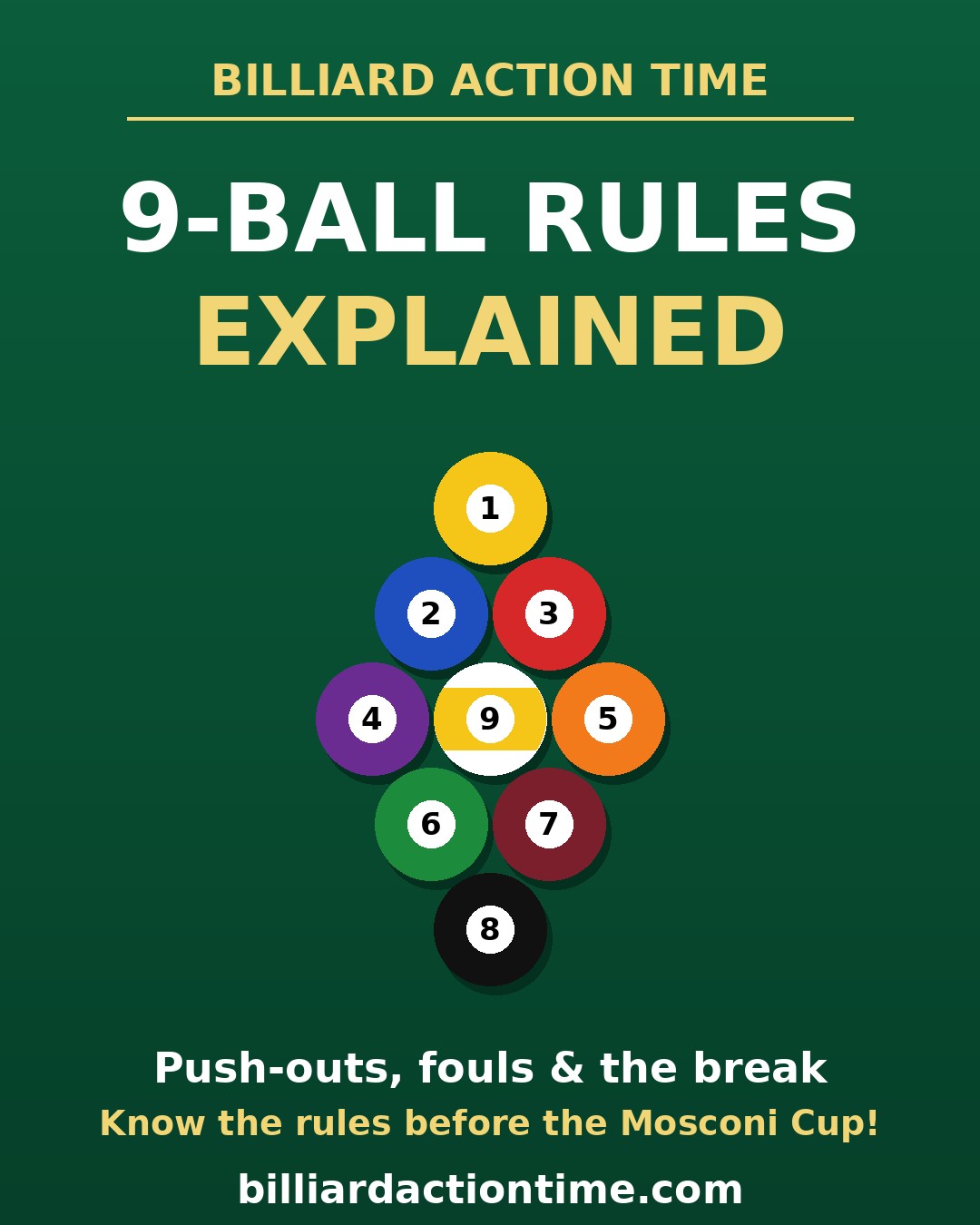
9-ball is played with the cue ball and just nine numbered balls, racked in a diamond with the 1-ball at the front and the 9-ball in the middle. The rule that defines the game is simple: on every shot, the cue ball must first hit the lowest-numbered ball still on the table.
That ball does not have to go in a pocket on that shot, and you can pocket other balls along the way. Pocket the 9-ball legally and you win the rack. It is a game of order, planning and a little bit of nerve.
The break: where every rack starts
The player who breaks fires the cue ball into the tightly packed rack. Under most professional rules, a break is legal when a ball is pocketed or at least four balls reach a cushion. If the 9-ball falls on a legal break, the breaker typically wins the rack on the spot, which is why the break is such a big deal.
If you watch the pros, notice how hard they hit it. Power matters, but so does control: the best breakers keep the cue ball near the middle of the table so they have a clear look at the 1-ball.
Fouls and ball in hand
Fouls are where games turn. The most common ones are:
- Missing the lowest ball. The cue ball hits another ball first or hits nothing at all.
- No cushion after contact. After the cue ball touches the lowest ball, either a ball must be pocketed or some ball must touch a rail.
- Scratching. The cue ball falls into a pocket.
- Knocking a ball off the table.
After a foul, the next player gets ball in hand: they can place the cue ball anywhere on the table. That is a huge gift, so pros work very hard to avoid fouling and sometimes deliberately leave their opponent a tough spot instead.
The push-out: the sneaky rule fans love
Here is the one that confuses newcomers. On the shot right after the break, the shooter may call a push-out. They can hit the cue ball anywhere without needing to touch the lowest ball or pocket anything, as long as they announce it first.
Then comes the twist: the opponent chooses. They can either shoot from where the balls now sit or pass the shot back. A good push-out leaves a position that looks easy to shoot but is secretly very awkward, so the opponent has a real decision to make.
When you see a player lean over, think for a long time and then say "your shot," you have just watched a push-out chess match.
Combos and the 9-ball finish
You can win a rack in a few exciting ways. A player can pocket the 9-ball by running the table in order, or they can hit the lowest ball into the 9-ball to sink it in a combination, or use a carom. These shots are legal because the cue ball always touched the lowest ball first, so the crowd gets those thrilling surprise endings.
How the Mosconi Cup scoring works
The Mosconi Cup puts five players on Team USA against five on Team Europe. According to the tour, matches include singles, doubles and team matches, each is a race to five racks, and each match win earns one point for its team. The first team to reach 11 points wins the Cup.
Europe is the defending champion, and the USA will be hoping that home-table energy in Florida helps it win the trophy back. Johan Ruijsink is listed as Team USA's captain, and Niels Feijen is named as Team Europe's captain on the event page.
What, when, where and how to watch
- What: The 2026 Mosconi Cup, Team USA vs. Team Europe.
- When: November 27-30, 2026.
- Where: Caribe Royale Resort, Orlando, Florida.
- Watch: The tour streams on WNT TV, and an announced ESPN deal says every session streams live on ESPN+ through the ESPN app. Check the official event page for the final schedule.
Quick cheat sheet for new fans
- Always hit the lowest-numbered ball first.
- Pocket the 9 legally and the rack is over.
- A foul gives your opponent ball in hand.
- A push-out lets the next player choose to shoot or pass.
Want to see more action before the big event? Browse the big tournaments page, find something near you on this weekend's list, or keep learning in our pool guides. Rules can differ slightly between organizers and local leagues, so always check the rules used at your own event.
Which rule surprised you most? Tell us in the comments and pick your pick for the Cup!