
Pool Table Sizes Explained: 7-Foot, 8-Foot and 9-Foot Tables
Ever noticed that a pool table at the bar feels totally different from the one on TV? You are not imagining it. Pool tables come in several sizes, and the size changes everything: how far the cue ball travels, how tight the pockets feel, and how much room you need in your house. Here is a friendly guide to the sizes you will run into.
The pro standard: the 9-foot table
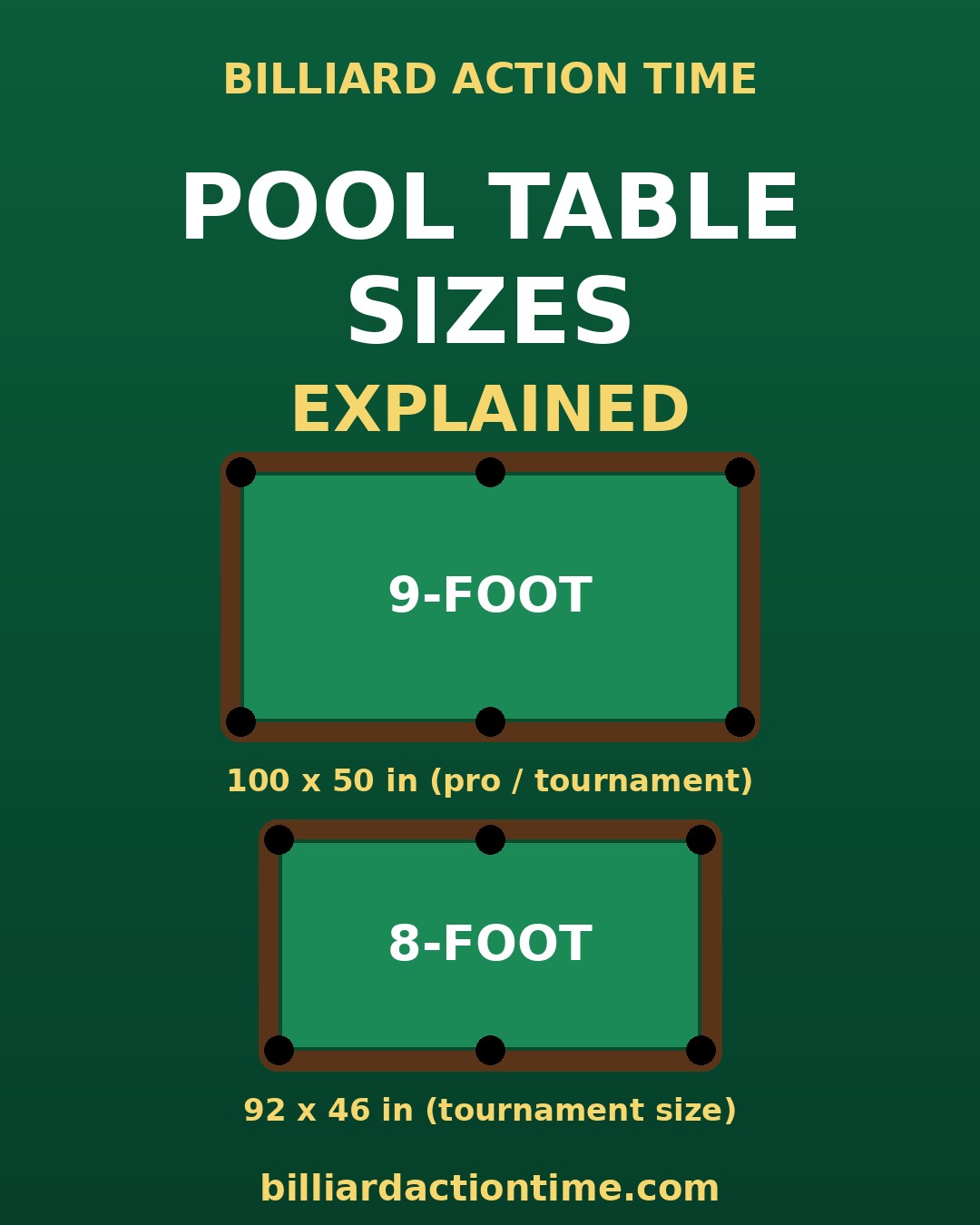
When you watch big events like the Mosconi Cup, the players are on a 9-foot table. Under the World Pool-Billiard Association (WPA) equipment specifications, the playing surface of a 9-foot table measures 100 by 50 inches (about 2.54 by 1.27 meters), measured between the cushions. That is exactly twice as long as it is wide, which is a handy fact when you start learning angles.
The pockets are specified too. Corner pocket mouths measure 4.5 to 4.625 inches, and side pockets measure 5 to 5.125 inches. The balls are about 2¼ inches across, so there is not a lot of spare room. That is why pro-level pocketing looks so impressive.
The 8-foot table: the in-between size
The WPA specification also lists an 8-foot table with a playing surface of 92 by 46 inches and the same pocket mouth sizes as the 9-footer. It plays a little smaller, so shots are a touch shorter and position play feels a bit easier. Many leagues and tournaments use 8-foot tables, and so do many home game rooms.
One thing to watch for when shopping: some tables sold for home use are labeled 8-foot but have slightly different playing dimensions, and the WPA notes that its specifications do not necessarily apply to tables made for commercial home use. If exact size matters to you, check the maker's listed playing surface before you buy.
The 7-foot bar table: small, busy and fun
Walk into a bar or pub and you will most often find a smaller table, usually called a 7-foot or bar-box table. Exact dimensions vary from one manufacturer to the next, so there is no single number to memorize. What stays consistent is the feel: shorter distances, a crowded layout, and balls that tend to bump into each other more often.
That is also why switching sizes can feel tricky. A player who runs racks all day on a bar table may find a 9-footer unforgiving, and a 9-foot regular may overhit everything on the small table. Give yourself a few practice games when you change tables.
Why size changes your game
On a bigger table the cue ball has to travel farther, so speed control and cut angles matter more. Long shots that look easy on a bar table can become real tests on a 9-footer, because tiny aiming errors grow over distance. The pockets are the same width on the 8- and 9-foot WPA specs, but on the smaller surface there is simply less table between the ball and the hole, so the same pocket feels friendlier. Cue ball position is easier to manage when the layout is compact, which is one reason bar tables produce so many fast, noisy games.
The takeaway: your skills transfer, but your touch needs a short warm-up. Spend ten minutes hitting a few long straight shots and some gentle position drills before you play for fun or in a league.
How much room do you need at home?
The table is only half the story. You also need space to swing the cue on every side. A simple rule of thumb many players use is to take the cue length, about 58 inches for a standard cue, add the table length, and then add another cue length. The table frame is a bit larger than the playing surface, so an 8-foot table usually wants a room of roughly 18 feet by 14 feet to play comfortably. Measure the longest shots you will need, including awkward ones along the rail, before you commit.
- Short on space? A smaller table, plus a few shorter cues, can keep the game fun.
- Want to train like the pros? A 9-foot table teaches precision, but it needs a big room.
- Want the best mix? An 8-foot table is a popular middle ground.
Which table is best for learning?
Honestly, the best table is the one you can play on most often. Beginners often enjoy smaller tables because balls drop more readily and rack after rack feels rewarding. Players who want to improve for events often move to bigger tables to sharpen cue ball control. If you are curious about watching the best in the world on 9-foot tables, check our big tournaments page and the pool calendar. Want to play yourself? Try the tournament finder for events near you, and browse our guides for tips on getting better on any size table.
Quick size cheat sheet
- 9-foot: 100 x 50 inch playing surface. Pro events.
- 8-foot: 92 x 46 inch playing surface in the WPA spec. Leagues, rec rooms.
- 7-foot: bar tables, sizes vary by maker.
So which size do you play on most? Tell us in the comments on our social pages, and we will see you at the table.